





Skip to content

Consultation

Volumisers.

Volumisers are made up of hyaluronic acid (HA) that is stabilised and cross-linked to make it last longer and provide structural support. They consist of a synthetic sugar molecule naturally found in human skin and connective tissue that attracts water. For volume restoration where time has thinned it, cheek, lip, chin, jawline, nasolabial folds, the soft tissues that change shape with age. Considered, never overdone.

Enquire

What volumisers actually do, and where they belong.

Volumisers is Lux Lab's name for the category of prescribed injectables that restore volume where the face has lost it. With time, ageing thins the fat pads, redistributes the bone, drops the soft tissue downward, and the result can be a slightly tired, hollow, deflated look most people first see in profile or in candid photos. The treatment puts structure back into specific points, cheek, jawline, lip, chin to support the surrounding tissue from the inside.

The best volumiser work is invisible. Nothing should look 'done.' The aim is to restore what time has taken, not to add more than was there in the first place. Tara's approach is evidence-based and considered, the goal is to look better and less tired without looking done.

Volumisers are prescription-only medical products. Every Lux Lab injectable treatment is preceded by a consultation and prescription from a doctor or nurse practitioner, issued before any treatment.

By area.

  • Cheek restoration

    (1)

  • Lip balance

    (2)

  • Chin projection

    (3)

  • Jawline definition

    (4)

  • Nasolabial folds & marionette lines

    (5)

In detail.

An anatomical breakdown of each area, what causes the change, and how the treatment works there.

Cheek restoration

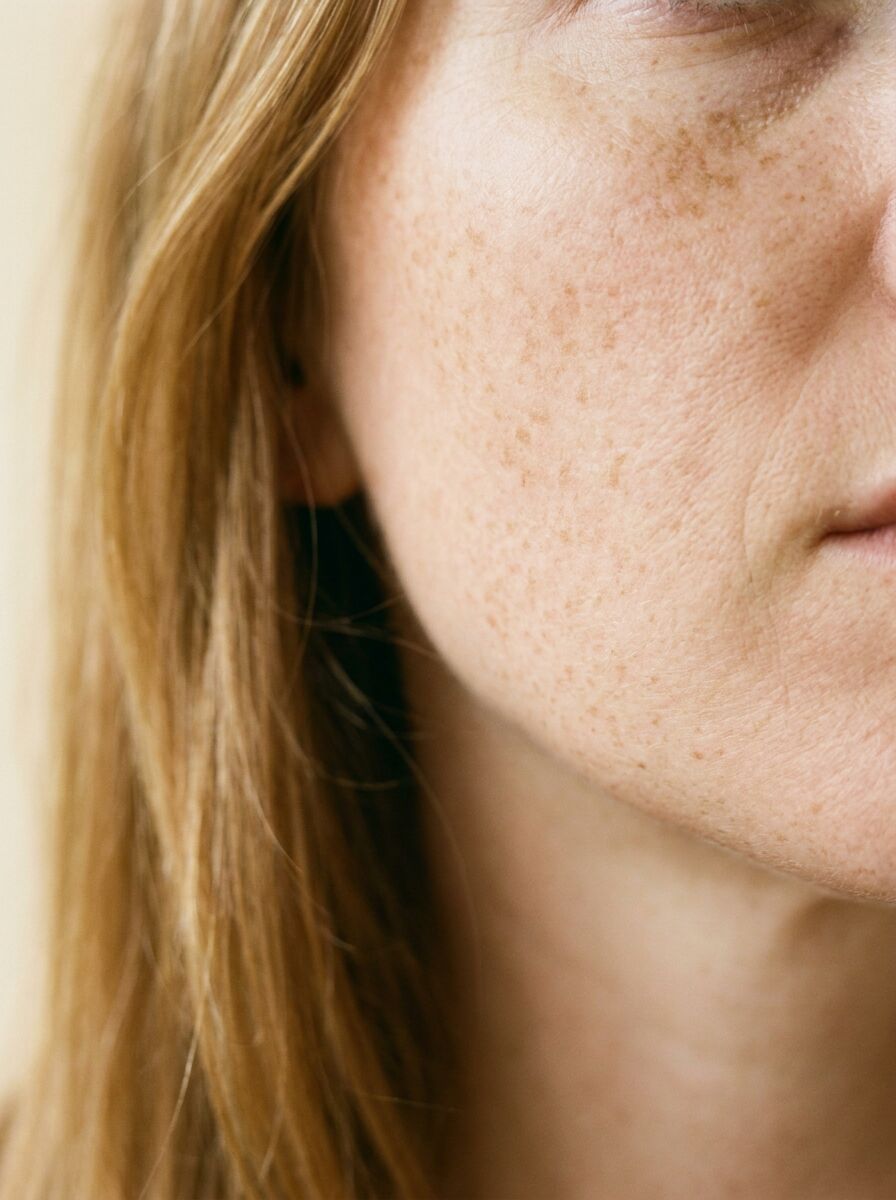
The cheek is the structural anchor of the upper and mid-face. It is built on the zygomatic bone, supported by a layered fat pad system (the malar fat pad sits superficial to the cheekbone; the sub-orbicularis oculi fat sits deep to the orbicularis oculi muscle, below the inferior orbital rim). With age, both fat pads thin and slide downward, the bone underneath loses density, and the soft tissue above descends. What was a supported cheek at twenty-five reads as flatness at forty-five, with a deeper shadow under the eye and an earlier-than-expected nasolabial fold.

Cheek restoration places the prescribed product precisely where the volume has been lost, most often on the bone itself or in the deep pre-zygomatic plane. The aim is to restore the structural support of the cheek, not to inflate the surface. Because the cheek lifts the tissue below it, restoring volume here often softens the tear trough and the nasolabial fold without those areas being treated directly. Tara's preference is to start in the cheek for any mid-face volume concern and only treat the secondary areas if the result is not enough.

Effect is immediate, with the final settled result visible at two weeks. Cheek volumiser results typically last 12 to 18 months. Over-treatment in this area shows quickly and is the most common reason cheek work reads as obvious. Positioning and dosing of volumisers is important for subtle, natural-looking results; Tara doses conservatively for this reason.


Lip balance

The lips are built around the vermillion border (the edge where lip meets skin), the philtral columns (the two vertical ridges that run from the upper lip to the nose), and the cupid's bow at the centre of the upper lip. With age the vermillion border softens, the philtral columns flatten, the cupid's bow loses its definition, and the lips themselves thin from the inside as the soft tissue volume reduces. The change reads as a less-defined lip overall, often with lipstick bleeding into surrounding lines for the first time.

Lip work at Lux Lab is about restoring the structure and natural contour of the lips. Tara places small volumes of the prescribed product precisely into the body of the lips, carefully preserving the patient's natural shape and proportions of the lips and face.

Lip volumiser results typically last 12 to 18 months. Bruising and swelling can occur as this is a highly vascular area.

Chin projection

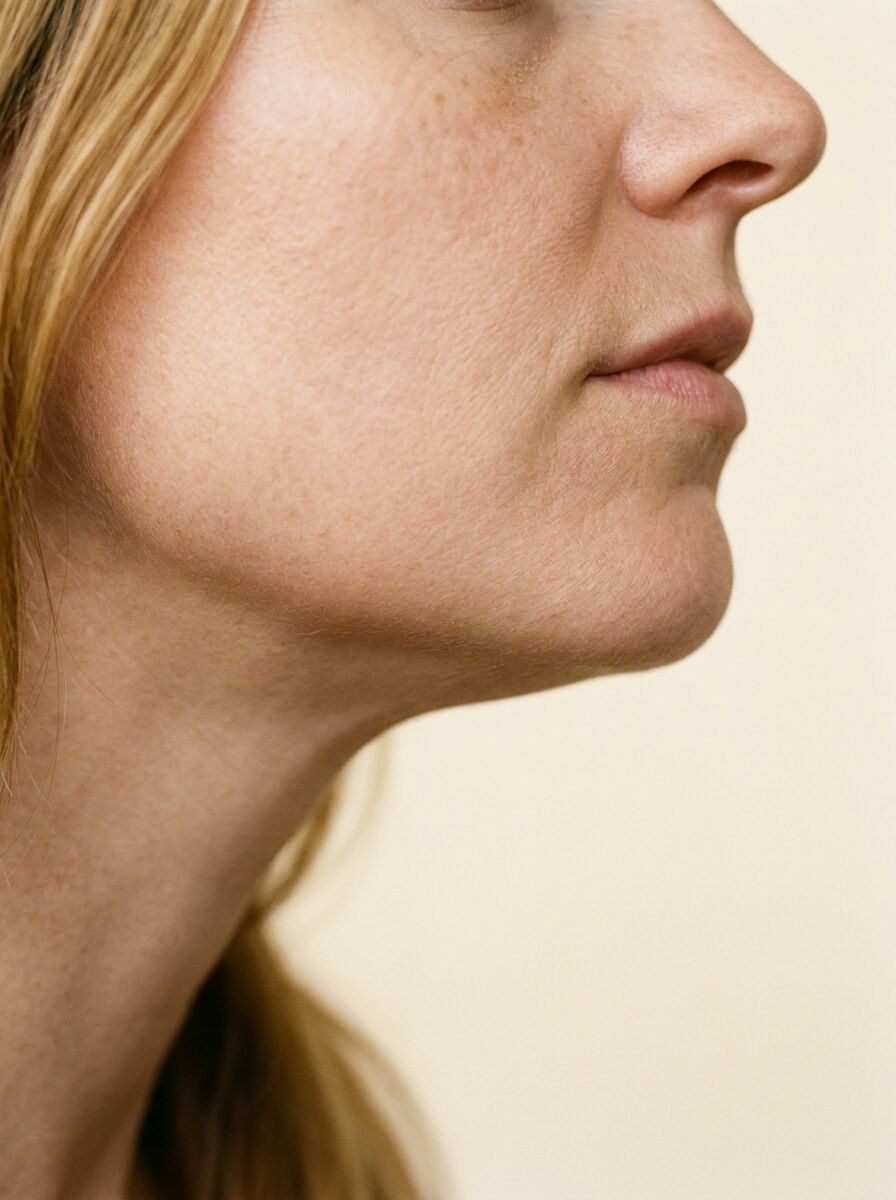
The chin is one of the most under-recognised structural elements of the face. In profile, the chin should sit roughly in line with the lower lip and the lower part of the nose, forming a clean angle between the lower face and the neck. A chin that sits behind that line, whether by genetics or with age, makes the lower face look short and can pull the jowl forward as the tissue above sags into the lower-face gap. Many people who think they need volume in the lips or cheek actually have a chin issue creating the imbalance.

Chin projection uses the prescribed product placed against the chin bone, most often at the chin point and along the pre-jowl sulcus (the small dip just in front of where the jowl would form). The aim is structural support, not bulk. A small, well-placed volume produces a meaningful change in profile balance.

Result is immediate, with settling visible at two weeks. Chin volumiser results typically last 18 to 24 months, longer than most areas, because the product is placed against bone and is less mobile than treatment in soft tissue. Tara routinely treats the chin in combination with the lower lip or the jawline, and rarely treats lips without first assessing whether the chin is contributing to the imbalance. Treatment near the chin point can affect the lower lip if dosed incorrectly; Tara assesses speech and lip function before and after every session and provides a 2-week complimentary review.

Jawline definition

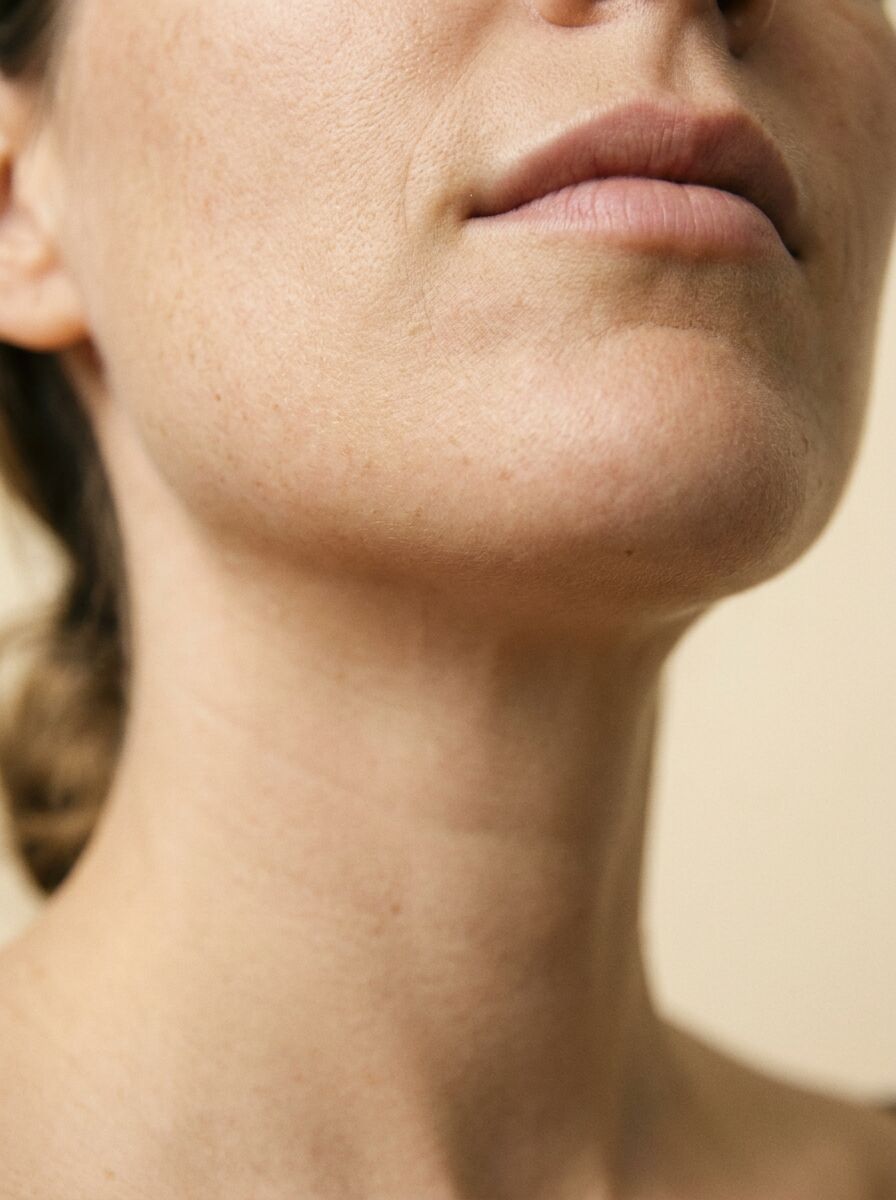
The jawline is the architectural frame of the lower face. It runs from the chin point along the body of the mandible, up through the jaw angle (the gonial angle), and meets the masseter muscle at the side of the face. With age, three things change: the mandible thins along its border, the soft tissue above the jawline softens and shifts downward (the early-stage jowl), and the masseter often thickens from years of clenching, which widens the lower face at the angle while the front of the jaw softens.

Jawline treatment restores the structural contour of the jaw without making the face wider. Tara places small volumes of the prescribed product precisely along the mandibular border and at the jaw angle. Jawline volumiser results placed against bone typically last 18 to 24 months.

In female patients, treatment is performed with careful attention to preserving natural facial proportions and maintaining a soft, harmonious lower facial contour, avoiding over-augmentation that may create a heavier or more angular appearance. In male patients, a stronger and more defined jawline is often desirable and is enhanced in keeping with typically broader mandibular structure and skeletal support, while still respecting individual anatomy.

Nasolabial folds & marionette lines

The nasolabial fold runs from the side of the nose to the corner of the mouth. The marionette line runs from the corner of the mouth toward the jaw. Both deepen with age, and both are usually caused not by the fold itself but by what's happening above it: the mid-face descending, the cheek pad shifting downward, the lower face losing definition. When patients ask to have these folds treated directly, the result is often disappointing, because the underlying cause is mid-face volume loss, and the fold simply reappears as the cheek above continues to descend.

Tara's approach is to treat the cause before the symptom. In most cases that means cheek restoration first, with a fraction of the volume that would otherwise have been used on the fold itself. If the fold is still visible after the mid-face has been supported, smaller targeted volumes can be placed along the fold to soften the line without filling the groove flat. The marionette line is treated similarly, often in combination with chin projection or a small dose of muscle softener at the depressor anguli oris.

Result is immediate. Maintenance depends on which areas were treated and where. Tara is honest at the consultation about which folds will respond well to treatment and which will benefit more from supporting work elsewhere on the face or alternatives to volumisers. Some folds, particularly very deep nasolabial folds, are better addressed by surgical options than by over-volumisation, and she will say so clearly when that is the case.

What to expect.

Common questions.

  • Do I need a consultation before treatment?

    Yes. Under Australian regulations, a prior consultation is mandatory for all new patients considering cosmetic injectable treatments, including discussion of the associated costs. This ensures your health, suitability, and treatment goals are appropriately assessed before any prescription product is prescribed.

  • Will treatment be performed on the same day as my first consultation?

    Yes. All new patients require a consultation before prescription cosmetic injectable treatments can proceed. In many cases, treatment can be performed on the same day once you have been appropriately assessed and a prescription has been issued by the Doctor or Nurse Practitioner.

  • Is the consultation free?

    Yes. Lux Lab offers a free consultation for all clients. You are provided with a treatment plan, cost estimate and no obligation to proceed.

  • What causes facial volume loss?

    Ageing, genetics, lifestyle, and sun exposure all play a role. Collagen production slows, fat pads redistribute, bone density gradually declines, and skin elasticity reduces. These changes are structural, skincare alone cannot reverse them, though it can support the skin around them.

  • I've had filler before, do I need this consultation?

    If you're new to Lux Lab, yes. Even if you've had treatment elsewhere, Tara needs to assess your current anatomy, review your history, and make sure you're suitable for the next session. Existing Lux Lab clients can book directly if their history and goals haven't changed.

  • What's the difference between volume replacement and softeners?

    Softeners (muscle-relaxant injectables) target the muscles that drive expression lines, they relax movement. Volumisers (dermal filler) restore structural volume where time has thinned it. Many faces benefit from both; the consultation works out which, where, and in what order.

  • Is volumiser treatment permanent?

    No. Most modern volumiser products provide results that last 6 to 24 months, depending on the product chosen and the area treated. Tara discusses longevity and a maintenance plan at the consultation.

  • Will I look 'overdone'?

    Not if Tara is doing the work. The goal of every volumiser treatment is invisibility, nothing should look filled. Tara's approach is evidence-based and considered; most first sessions are smaller than people expect, with the option of a small top-up at the two-week review.

  • Is there downtime?

    Most clients return to their day after the treatment. Mild swelling, small marks at injection points, or some bruising can persist for 24 to 72 hours; a small percentage of clients bruise for up to a week. Plan to avoid alcohol, heavy exercise, and direct heat for 24 hours after.

  • How long do volumisers last?

    Result longevity depends on the product type, the area treated, and the patient's metabolism. Cheek and chin results typically last 18 to 24 months because the product is placed against bone; lip work lasts 9 to 14 months because the area is more mobile. Tara discusses longevity for your specific plan at the consultation.

  • Can volumisers be dissolved if I don't like the result?

    The most common category of prescribed volumiser (hyaluronic-acid-based products) can be dissolved with a separate prescribed enzyme treatment. Other categories cannot be dissolved and must be allowed to metabolise naturally. Tara discusses which product is right for your plan and the reversibility implications at the consultation.

  • What does volumiser treatment cost?

    Tara discusses costs at the consultation, in detail, with no obligation to proceed. Australian regulations restrict the publication of pricing for prescription-only treatments outside of the consultation context.

  • Is Lux Lab supervised by a doctor?

    Yes. Every cosmetic injectable treatment includes a doctor or nurse-practitioner consultation and prescription, issued prior to any treatment.

Considered consultations, by appointment.

Enquire