


Skip to content

Consultation

Biostimulators.

A category of injectable treatment designed to support gradual collagen stimulation over time and may assist with skin texture, structural support, and overall skin quality. Slow, structural, gradual, using your body's own collagen and elastin.

Enquire

What biostimulators are, and how they differ from filler.

Biostimulatory injectables are a category of cosmetic injectable that prompt the skin to make more of its own collagen and elastin over time. Unlike traditional dermal filler, which adds immediate volume to a specific point, biostimulators work in the deeper dermal layer to support the skin's own scaffolding. The visible change is gradual, measured in weeks to months, and reads as the face looking refreshed and structurally supported, rather than altered.

Collagen turns over slowly. The skin loses around one percent of its scaffolding each year after the mid-twenties, and that loss is what most people notice as hollowing, softening, or a general "tired" look that no skincare seems to fix. Biostimulators work in that quiet underlying layer. The treatment usually involves two to three sessions with a review at eight weeks.

Biostimulators are prescription-only medical products. Every Lux Lab injectable treatment is preceded by a consultation and prescription from a doctor or nurse practitioner, issued before any treatment.

By area.

  • Mid-face support

    (1)

  • Lower face & jawline

    (2)

  • Temples & brow

    (3)

  • Neck & décolletage

    (4)

In detail.

An anatomical breakdown of each area, what causes the change, and how the treatment works there.

Mid-face support

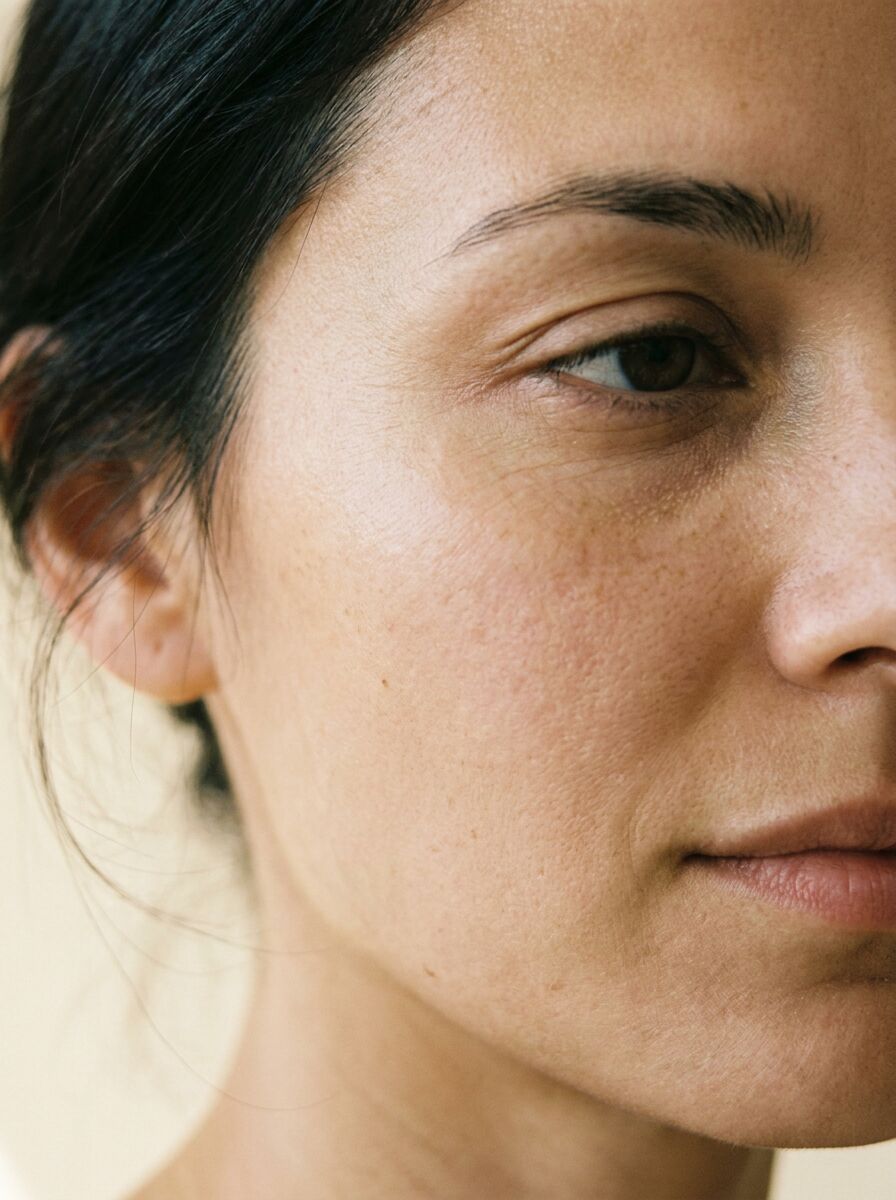
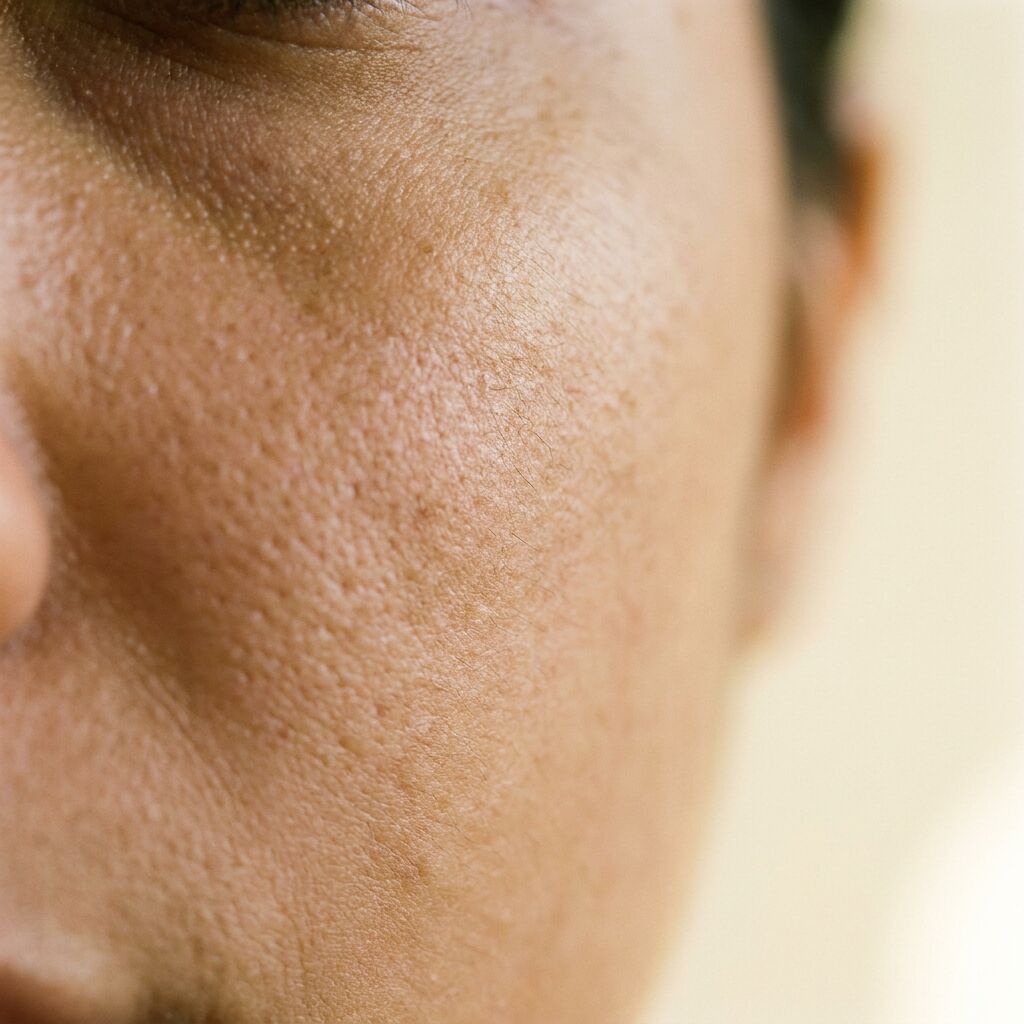
The mid-face is the area between the lower eye and the upper lip, and it carries more of the visible signs of facial ageing than any other zone. With time the malar fat pad descends, the zygomatic bone thins slightly, and the deep dermal layer loses its collagen scaffolding. What was a supported cheek at twenty-five gradually reads as flatness, shadow, or a tired hollow under the eye. Most people notice the change first in candid photographs, not in the mirror.

Biostimulators in the mid-face do not add volume in the way dermal filler does. They are placed in the deeper layer and prompt the body's own fibroblasts to produce new collagen and elastin over the months that follow. The cumulative effect is restored structural support across a wider area, rather than a localised point of volume. The cheek looks supported, not filled.

Longevity varies between individuals and depends on factors such as age, baseline collagen levels, treatment area, number of sessions performed, metabolism, lifestyle, and the degree of facial ageing present. Following an initial series of two sessions, many patients maintain their results for 18 to 24 months before considering maintenance treatment.


Lower face & jawline

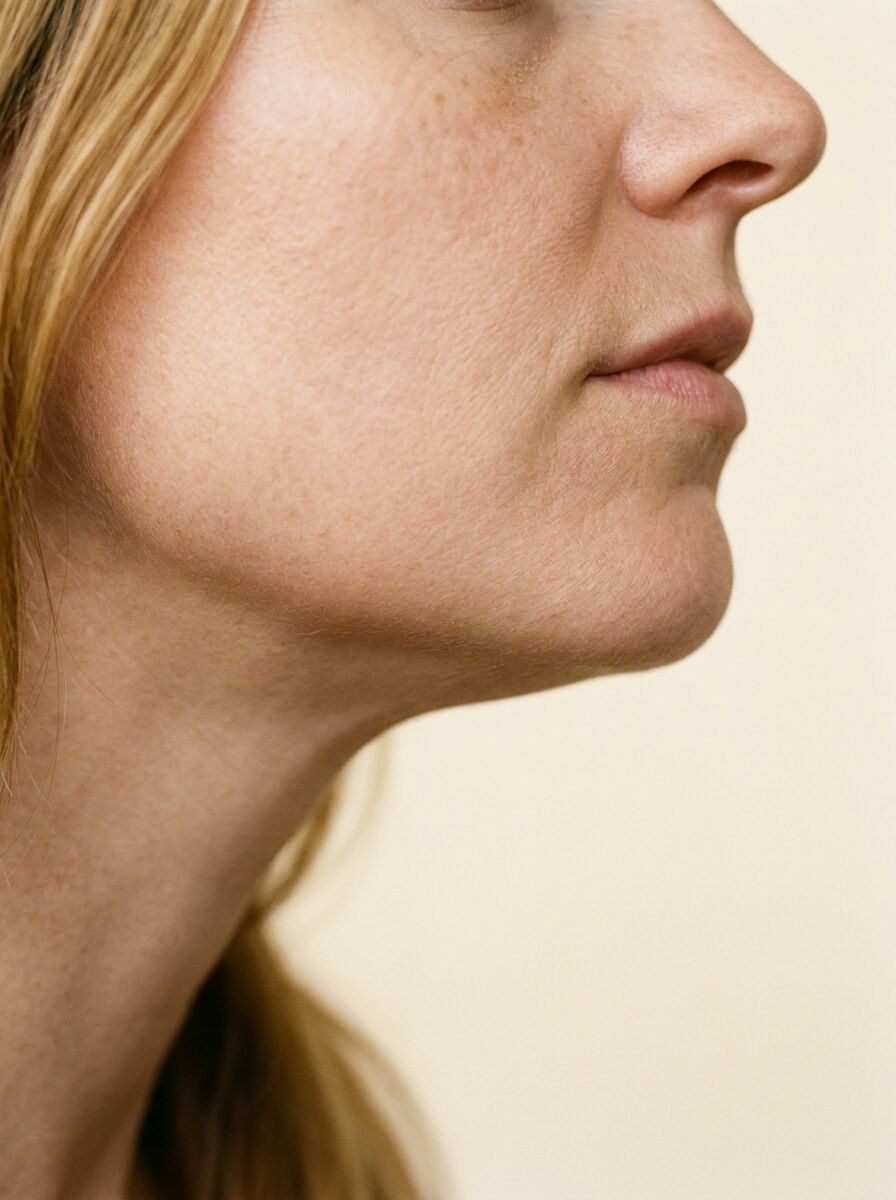
The lower third of the face changes shape with age in ways that are easier to feel than to describe. The mandible thins slightly along its border. The masseter muscle, often thickened from years of jaw clenching, holds the lower face in a wider position at rest. The skin and soft tissue above the jawline begin to soften and shift downward, blurring what was once a clean line between the jaw and the neck. The face starts to read as squarer at the lower angle and less defined at the front of the jaw.

Biostimulators along the lower face and jawline work in the deep tissue planes above the bone and below the muscle. The aim is to provide dermal support across the jaw contour itself, restoring some of the structural definition that has softened, rather than projecting the jaw outward as filler would. The treatment is considered by design.

Most patients see immediate changes with the maximum results at six to eight weeks after the second session. The lower face is one of the areas where two sessions usually produce a result that holds for 12 to 24 months. Results vary between individuals depending on individual pathophysiology. Inadequate response may occur in patients with very low baseline collagen turnover; Tara discusses realistic expectations at the consultation.

Temples & brow

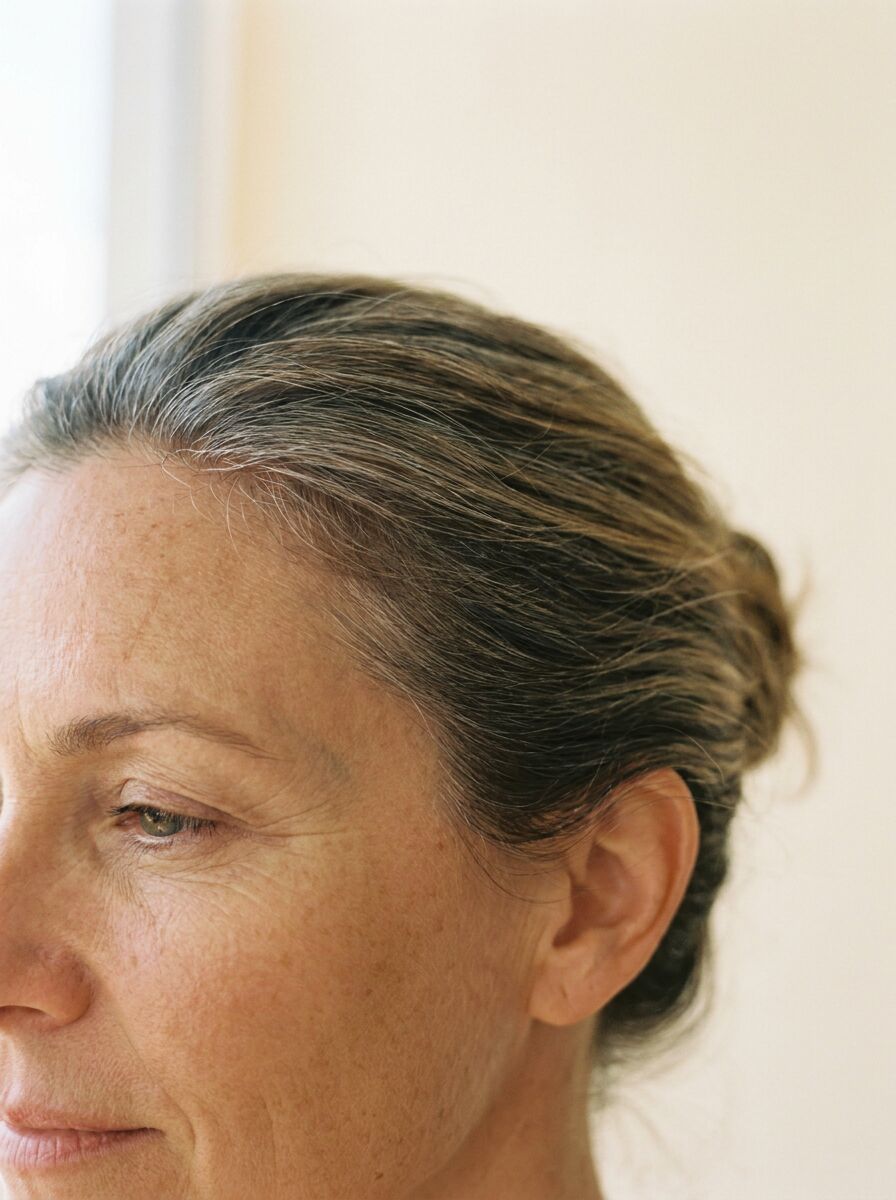
The temple sits in a shallow bony hollow between the outer brow, the cheekbone, and the side of the forehead. With age, the temporal fat pad thins, the bone underneath remodels slightly, and the dermal layer loses elasticity. The temple becomes visibly hollow, the upper face starts to look narrower at the brow, and the brow itself can read as if it has dropped, even when the brow position has not actually changed. The whole upper third of the face takes on a tired, slightly skeletal quality.

Biostimulators placed in the temple work in the deep plane above the bone. They are not used to fill the hollow directly. Instead they support the body's own production of collagen and the surrounding tissue scaffolding across the temple area, which over months restores some of the soft transition between the side of the face and the outer brow. The brow above is left to sit naturally, lifted not by direct support but by the surrounding tissue regaining its tone.

Effect appears gradually over four to twelve weeks. Most patients need one to two sessions to see the result they want, with maintenance every 12 to 24 months. Temple work is one of the more natural-looking changes the treatment can deliver, because the change is structural and gradual rather than additive. It is often combined with a brow lift enhancer (a small dose of softener at the outer brow) when the brow position itself contributes to the upper-face read. Temple injection is close to important vessels; bruising is possible but typically self-limiting.

Neck & décolletage

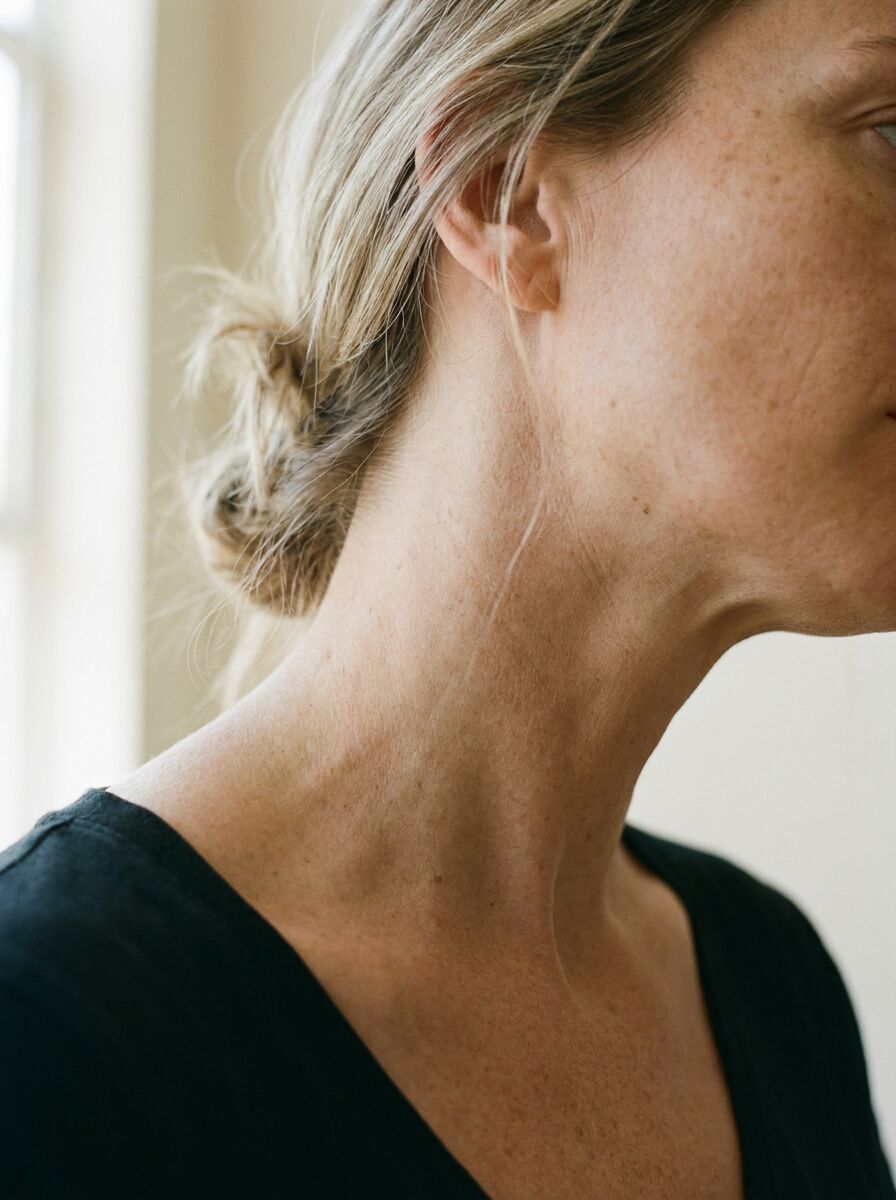
The neck and chest are usually the first parts of the body to show visible ageing, often well before the face does. The skin is thinner than on the face, with less subcutaneous support, and possibly decades of sun exposure tend to compound across the décolletage in particular. The result is the crepey texture, fine vertical lines, and uneven tone that most people describe as the giveaway when the face has been well cared for but the neck has not been.

Biostimulators in the neck and chest are not about adding volume. The treatment works in the dermal layer to support new collagen production across a wide surface area. The aim is skin quality: better thickness, better elasticity, a more even surface that reads as the same age as the face above it. It is one of the few in-clinic options that addresses the structural cause of décolletage ageing rather than just the cosmetic surface.

This is a slow treatment. The first changes appear at six to eight weeks, with the full effect reviewed at three months. Depending on the type of biostimulator used, most patients need two sessions four weeks apart for visible improvement, with maintenance every 12 to 24 months. Tara often combines neck and décolletage biostimulators with skin needling or topical skin protocols, because the dermal response to biostimulators is more pronounced in skin that is already being supported with consistent home care. The thinner skin of the neck responds more variably than the face; some patients need three sessions in the initial course.

What to expect.

Common questions.

  • What is the consultation for?

    Tara assesses your facial structure, skin quality, and overall suitability for treatment to provide recommendations tailored to your unique face and aesthetic goals. Your consultation also includes discussion of the potential risks, benefits, expected outcomes, treatment options, and associated costs, ensuring you can make a fully informed decision before proceeding in consultation with a doctor or nurse practitioner. A prescription is then arranged if you decide to proceed with treatment.

  • What is a biostimulator, and how is it different from a volumiser?

    Biostimulators are prescribed products that prompt the skin to produce more of its own collagen and elastin over weeks to months. Volumisers add immediate volume to a specific point. Biostimulators support the skin's own structure across a wider area, more gradually.

  • Will treatment be performed on the same day as my first consultation?

    Yes. All patients must undergo a consultation before prescription cosmetic injectable treatments can be provided. This allows your health, suitability, treatment goals, and associated costs to be properly discussed before a prescribing doctor or nurse practitioner approves treatment.

  • Is the consultation free?

    Yes. Lux Lab offers a free consultation for all clients. You are provided with a treatment plan, cost estimate and no obligation to proceed.

  • Are the results immediate?

    Yes and No. Biostimulators are designed to work gradually. While some early improvement may be seen initially due to the hyaluronic acid component, collagen and elastin stimulation develops progressively over the following weeks. The first signs of change are usually seen within six to eight weeks, with the full effect typically assessed around the three-month mark. Most clients require one to two sessions to achieve their desired result, with maintenance treatments every 12 to 18 months.

  • Is there downtime?

    Most clients experience temporary swelling, redness, tenderness, or small bruises at the injection sites for a few days following treatment. As biostimulators work by stimulating collagen over time, results develop gradually while normal daily activities can usually be resumed within 24 to 48 hours.

  • Who is this consultation suitable for?

    Anyone noticing facial-ageing changes such as cheek softening, jawline changes, temple hollowing, or a general loss of facial support and skin quality. Biostimulators are best suited to clients seeking gradual, natural-looking improvement by stimulating collagen and elastin within the skin and deeper tissues.

  • What if I am not suitable for treatment?

    Your consultation is a no-obligation space to explore options. If Tara doesn't think biostimulators are the best option for your face and skin, she will tell you, and discuss alternatives, or refer you on, if appropriate.

  • How many biostimulator sessions will I need?

    Most patients have a starter course of one to two sessions. The visible change builds over six to twelve weeks per session, and the full effect is typically reviewed at three months after the final session. Maintenance is approximately every 12 to 18 months.

  • Are biostimulators safe?

    Biostimulators are prescription-only and administered by a registered nurse with prescribing oversight. Most are well-tolerated when placed at appropriate depth in suitable patients; risks include nodule formation, product visibility under thin skin, and asymmetry. Tara assesses suitability at consultation.

  • Do biostimulators replace surgery?

    No. Biostimulators support structural improvement in patients with mild-to-moderate volume and collagen loss. They are not a substitute for surgical lifting in patients with significant tissue descent. Tara will say so clearly at consultation if surgery is the more appropriate option.

  • Is Lux Lab supervised by a doctor?

    Yes. Every cosmetic injectable treatment includes a doctor or nurse-practitioner consultation and prescription, issued prior to any treatment.

Considered consultations, by appointment.

Enquire